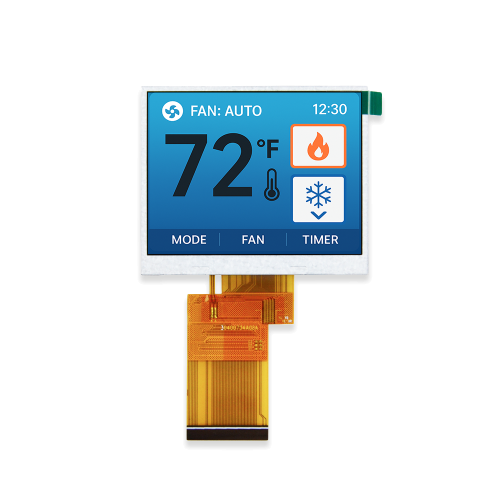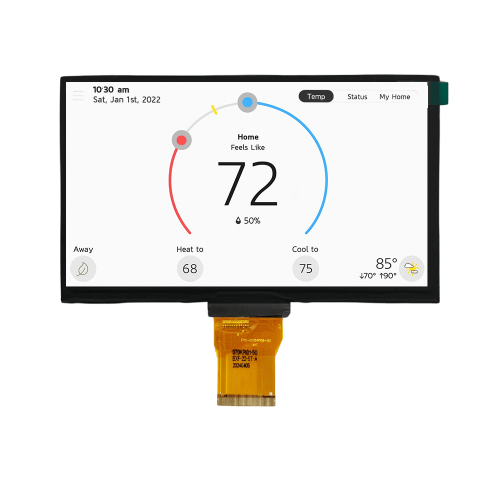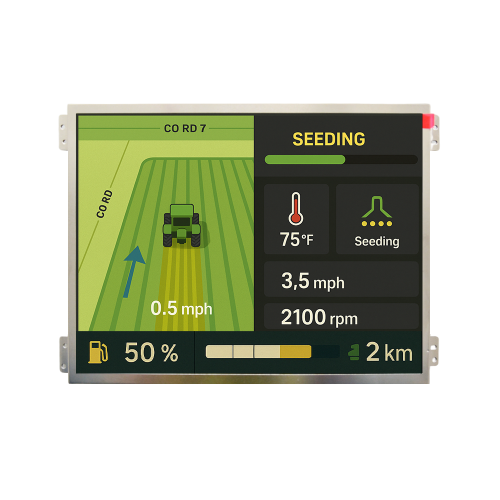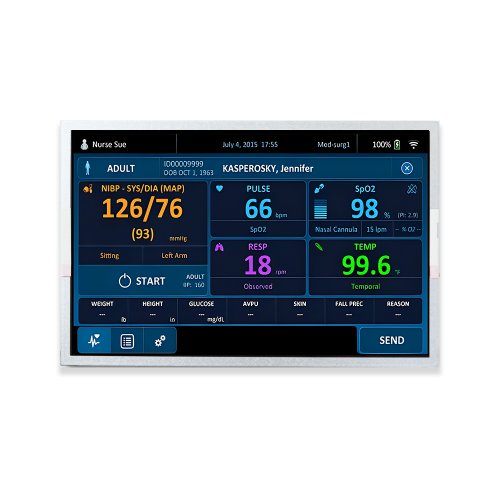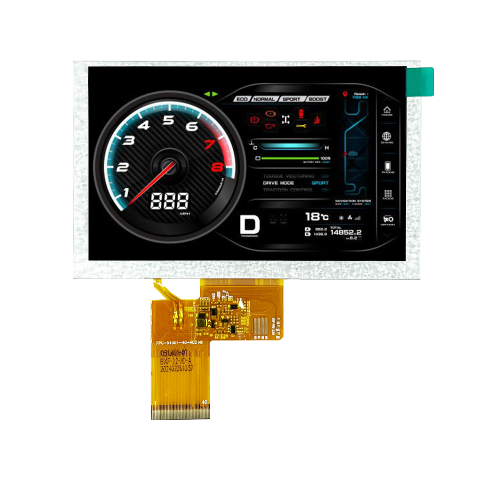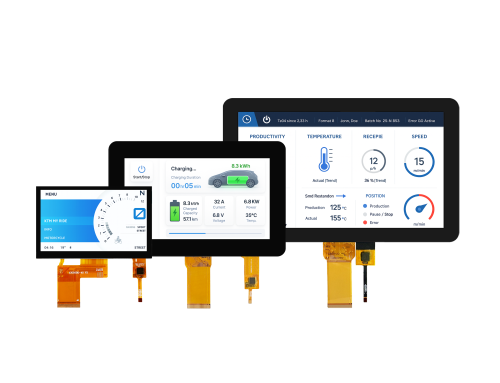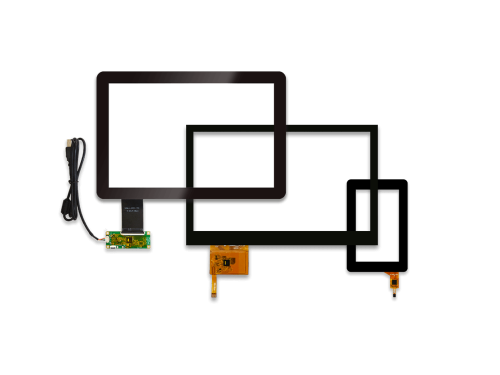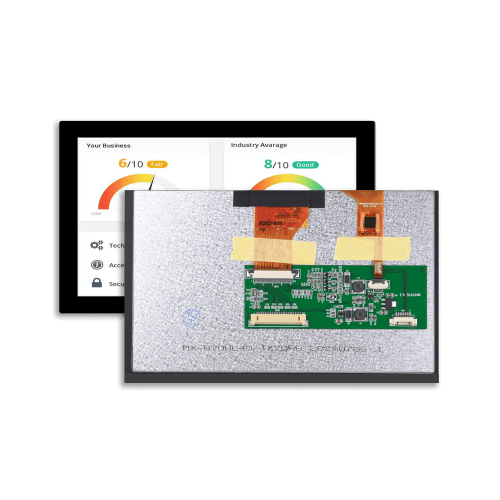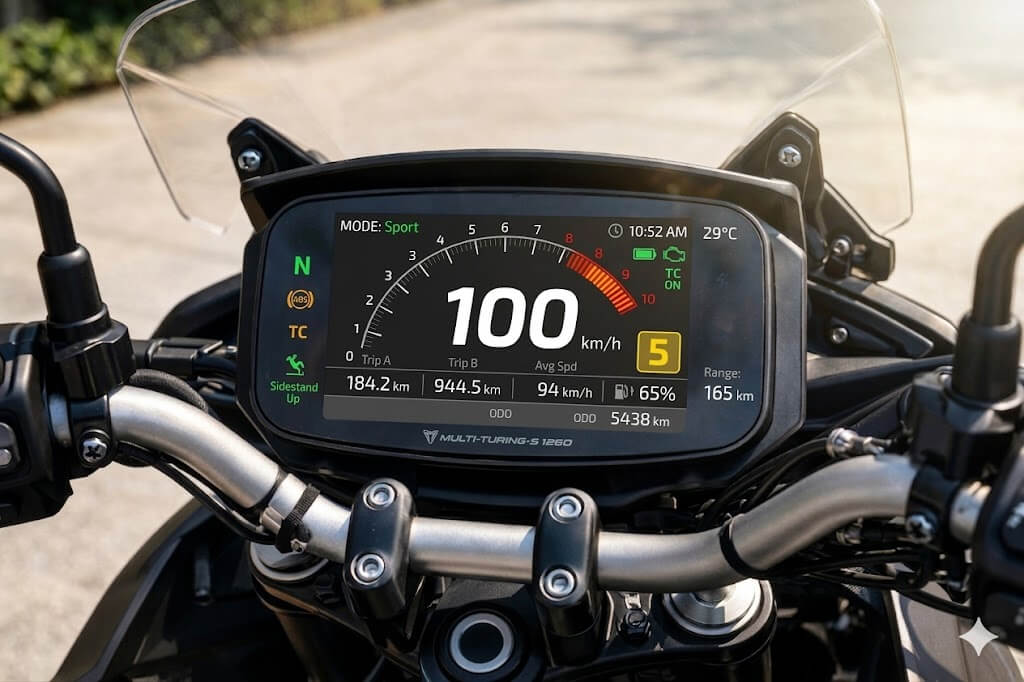
In two-wheeler instrument cluster projects, the display is far more than a simple visual component — it is a critical interface for real-time riding information. For hardware engineers and product managers evaluating two-wheeler cluster display solutions, outdoor readability is often more important than resolution alone. Speed, RPM, warning icons, battery level, range, and riding mode all depend on a screen that remains clear and stable under direct sunlight, strong reflections, and elevated operating temperatures. This is exactly where a high-brightness TFT module differs from a standard consumer-grade display.
Many standard displays in the 300–500 nits range may perform acceptably indoors, but once integrated into a two-wheeler dashboard, they often struggle in real outdoor conditions. Under strong sunlight, the image can look washed out, contrast drops quickly, and critical riding information becomes harder to read at a glance. For two-wheeler instrument clusters, readability is not just a visual preference — it directly affects interface usability, riding confidence, and the perceived quality of the product.
That is why more OEMs and device makers are moving toward a high brightness TFT LCD module specifically designed for outdoor embedded applications. A truly effective sunlight readable display panel is not created by brightness alone. It depends on how the backlight system, thermal design, optical surface treatment, and black-state appearance work together as one engineered module.
A two-wheeler display operates in a much harsher environment than a typical indoor screen. Direct sun exposure, reflected road glare, limited housing space, changing viewing angles, and long operating hours all combine to reduce readability and increase thermal stress.
In practical product development, outdoor display performance usually comes down to two key requirements: whether the screen stays readable in strong light, and whether it remains stable during long-term high-brightness operation.
This is why a two-wheeler dashboard display should not be judged by brightness specification alone. Engineers also need to consider reflection control, luminance uniformity, thermal dissipation, structural integration, and the visual appearance of the module when the screen is off.
For a high brightness TFT LCD module, the backlight system is one of the most important parts of the design. Reaching 1000 nits or more is not simply a matter of adding more LEDs. It requires a balanced approach to light efficiency, heat generation, uniformity, and long-term reliability.
The light guide plate plays a major role in determining how efficiently light is distributed across the module. Material choice, optical pattern design, and light extraction efficiency all affect the final brightness result.
In two-wheeler instrument displays, uniformity is nearly as important as peak luminance. A module may look strong on paper, but if the screen shows edge darkening, hotspotting, or uneven brightness, the actual viewing experience can still fall short. Riders do not see a single measurement point — they see the entire interface.
To achieve reliable outdoor readability, many cluster projects require a more advanced LED backlight structure than standard consumer products. Depending on the application target, the brightness level may be designed around 1000 nits, 1500 nits, or even a 2000 nits motorcycle screen concept for stronger sunlight environments.
These higher-brightness configurations are commonly considered for:
The purpose of high brightness is not to create a more impressive number on a datasheet. It is to maintain clear visibility in real riding conditions such as noon sunlight, tunnel exits, reflective roads, or high-angle viewing under outdoor glare.
In real engineering projects, the challenge is rarely whether a screen can be made brighter. The bigger question is whether that brightness can be sustained reliably.
As the backlight output increases, power consumption and heat generation typically increase as well. In a two-wheeler dashboard, that heat load may be amplified by sun exposure, enclosed housing design, and prolonged operating time in hot outdoor environments.
Without proper thermal control, a high-brightness module may face several long-term risks, including faster LED light decay, brightness drop over time, color shift, localized hotspot buildup, and reduced module lifetime.
For this reason, high-brightness display modules often require optimized thermal structures to support stable operation. This may include better heat transfer paths, more suitable substrate selection, and improved mechanical integration with the product housing.
For product managers, this point is especially important. A sample that looks bright during initial testing is not enough. If the thermal design is weak, performance can gradually decline in real use, especially in outdoor vehicle applications where heat exposure is continuous rather than occasional.
A common misunderstanding in outdoor display development is that higher brightness alone will solve sunlight readability. In practice, strong reflection from the top surface can still severely reduce perceived visibility, even when the backlight is powerful.
That is why a true sunlight readable display panel usually depends on both high-brightness backlight engineering and proper surface treatment on the cover lens.
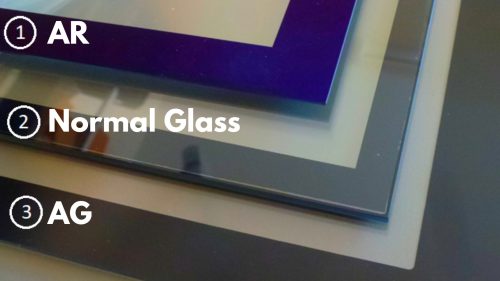
AG treatment helps diffuse direct reflected light and reduce the sharp glare that occurs when sunlight hits the surface. In two-wheeler dashboard applications, this can improve viewing comfort and make key information easier to read under bright outdoor conditions.
However, AG treatment should be matched carefully to the project. Excessive diffusion may affect image sharpness, so the goal is not simply “more anti-glare,” but the right balance between glare control and display clarity. This is also why selecting the right anti-glare cover lens structure matters in outdoor display development.
AR treatment helps reduce surface reflection and improve the effective transmission of visible image content. When combined with a high-brightness backlight, it can enhance outdoor readability without relying entirely on higher luminance output.
For higher-value two-wheeler dashboards, AR coating often contributes not only to practical visibility, but also to the overall perceived optical quality of the display.
For touch-enabled modules, AF treatment can reduce fingerprint buildup and make the cover surface easier to clean. While AF does not increase brightness directly, it helps maintain a cleaner appearance and preserves visual clarity in daily use.
In many outdoor display projects, AG, AR, and AF are not treated as isolated features. They are selected as part of an integrated cover lens strategy based on the application environment, product positioning, and user interaction needs.
In modern two-wheeler instrument clusters, the display is part of the industrial design, not just the user interface. That is why more vehicle projects now pay attention to the screen’s appearance even when it is turned off.
A good seamless black effect helps the display window blend more naturally into the surrounding housing, improving the overall visual quality of the product. This is especially important in mid-range and premium vehicle models, where first impressions are strongly influenced by surface integration and exterior finish.
Achieving a better black-state appearance usually requires multiple design factors to work together, including panel black performance, cover lens transmittance, border masking design, and silk printing control.
If these elements are not matched properly, the display may look grey, disconnected from the housing, or visibly framed when powered off. For OEM product teams, this is not just a cosmetic detail — it can influence how refined and integrated the final dashboard feels to the customer.
When selecting a high-brightness solution for a two-wheeler dashboard, it is important to look beyond the peak brightness number.
Actual outdoor readability should be evaluated under realistic usage conditions rather than lab-only figures. Thermal stability should be reviewed alongside brightness targets, especially for applications expected to run continuously in hot environments. Surface treatment choices such as AG, AR, and AF should be aligned with the installation angle, UI design, and user interaction mode. Black-state appearance should also be reviewed if the display is expected to support a more integrated and premium vehicle design.
In many cases, the best result comes not from a standard off-the-shelf panel, but from a solution tailored to the actual application. For projects that require stronger outdoor visibility and better integration, two-wheeler cluster display modules are often a more application-focused choice than general-purpose display modules.
Sunlight readability is not achieved through a single specification. It is the result of coordinated engineering across brightness design, thermal control, optical treatment, and visual integration.
For two-wheeler dashboards and other outdoor embedded devices, a well-designed high brightness TFT LCD module can provide clearer visibility, stronger performance consistency, and better long-term reliability under demanding conditions. From 1000+ nits backlight architecture to cover lens surface treatment and seamless black aesthetics, each element contributes to the final user experience.
For teams planning a sunlight readable display panel or evaluating a 2000 nits motorcycle screen concept, the more reliable approach is to review actual optical performance, application requirements, and sample validation together — rather than relying on headline specifications alone.
MAXEN specializes in custom TFT LCD display modules and capacitive touch solutions for industrial and embedded applications. Supported by in-house manufacturing in Dongguan and automated FOG bonding capability, MAXEN helps customers develop tailored solutions for size, interface, cover lens treatment, touch integration, optical bonding, and black-state appearance requirements.
For outdoor display projects such as two-wheeler instrument clusters, our team can support application-oriented development based on real project needs, including high-brightness backlight design, cover lens AG / AR / AF treatment, PCAP touch integration, and visual optimization for sunlight readability.
If you are developing a two-wheeler instrument cluster, electric scooter dashboard, or another outdoor embedded device, MAXEN can support your project with application-focused cluster display LCD solutions.
Contact our team to discuss your requirements, request optical test information, and apply for sample evaluation for outdoor readability verification.
This article is based on MAXEN’s experience in custom TFT LCD module development for outdoor and embedded display applications, including project considerations related to two-wheeler instrument clusters, high-brightness backlight design, cover lens surface treatment, and optical integration.
Actual outdoor readability may vary depending on brightness level, cover lens material, surface treatment, installation angle, housing design, and ambient lighting conditions. Final display performance should be verified through sample testing, optical evaluation, and application-level validation.


xiabenyue@outlook.com