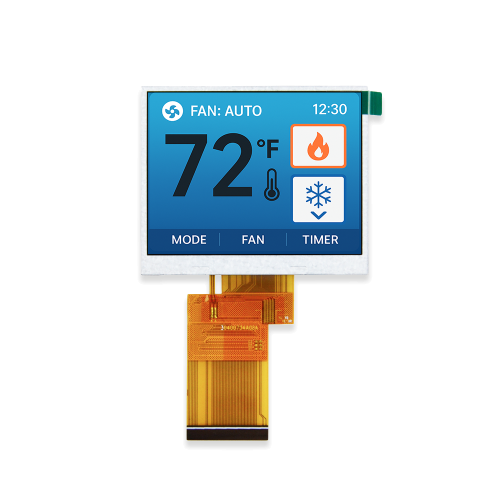
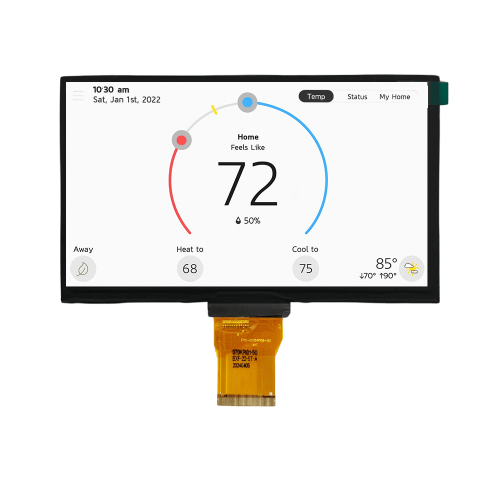
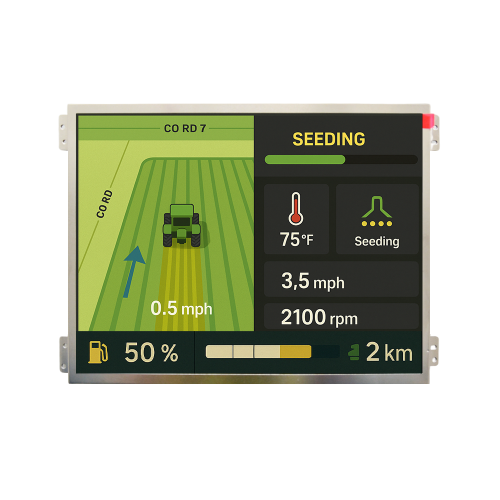
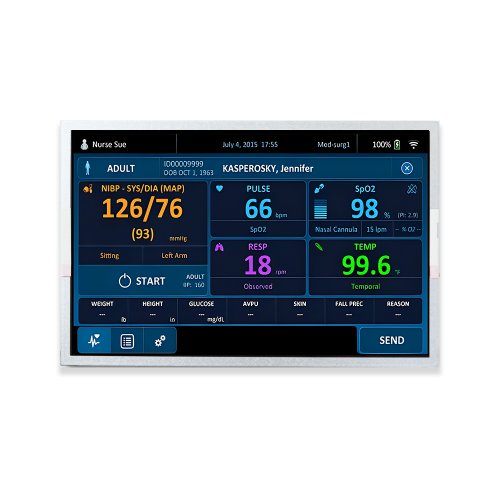
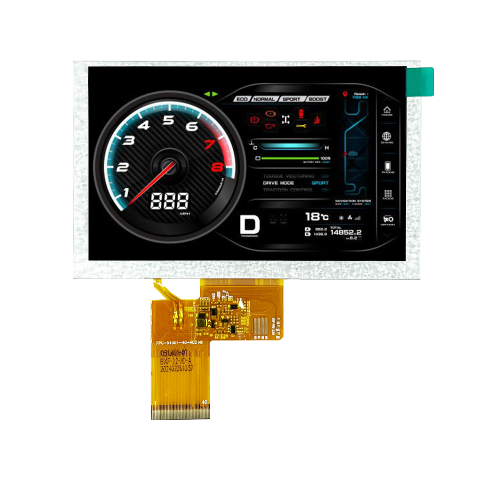
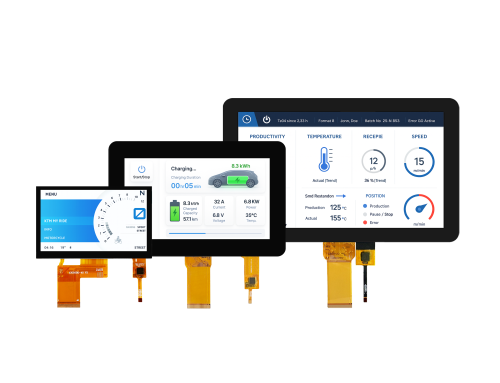
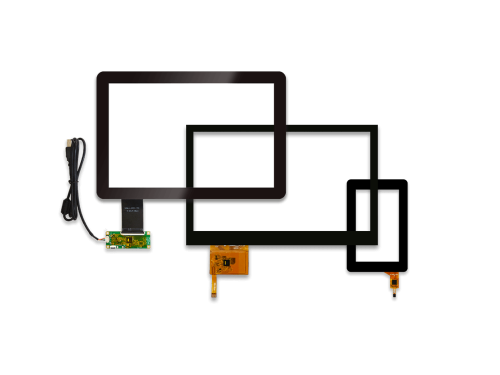
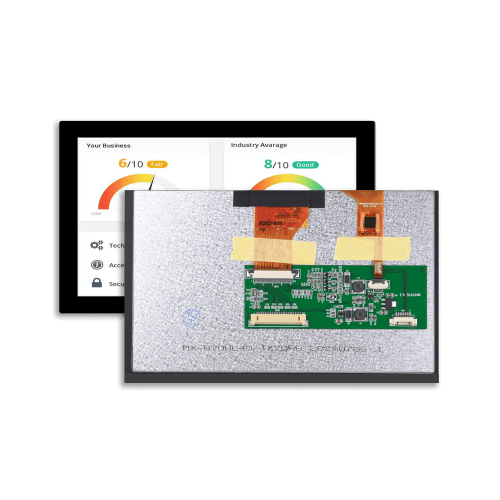
Access MAXEN’s latest product catalogs, quality certificates, new product updates, and technical FAQs for TFT LCD, touch screen, and custom display projects. These resources help engineers and buyers evaluate display specifications, customization options, lead times, and manufacturing capabilities.
Download the latest product catalogs for TFT LCDs, touch screens and custom display solutions.
View MAXEN's quality certificates, compliance documents, and manufacturing qualifications for industrial display projects.
Discover newly released TFT LCD modules, touch screen displays, and application-specific display solutions from MAXEN.
Find answers to common questions about customization, MOQ, lead time, interfaces, optical bonding, touch panels, and reliability testing.
Yes. We are manufacturer of TFT LCD display modules and capacitive touch screen solutions for industrial and embedded applications. With an in-house factory in Dongguan and automated FOG bonding lines, we support both standard supply and project-based customization.
The main product range includes TFT LCD display modules, custom capacitive touch screens, integrated display-and-touch modules, and optical bonding solutions. For suitable projects, support can also include cover glass customization, FPC adjustment, interface matching, and front-structure coordination to make integration easier.
The main application directions include industrial HMI, automation equipment, medical devices, two-wheeler displays, EV charging terminals, and other embedded systems. These projects usually require stable supply, reliable display performance, and flexible customization rather than consumer-electronics styling.
No. Standard models are available, but many projects are developed around customer requirements such as brightness, touch structure, interface, operating temperature, cover glass design, and mechanical fit. In practice, many customers are looking for a more suitable module solution rather than a simple catalog part.
Display sizes from 3.5 inches to 86 inches are available for embedded and industrial applications. Common interface options include RGB, LVDS, MIPI, and SPI, depending on the module size and system platform. The actual selection is typically based on motherboard compatibility, signal requirements, cable routing, and the mechanical layout of the end product.
Customization can include display size, resolution, interface, brightness, viewing angle, mechanical outline, wide-temperature adaptation, and display with touch integration. For industrial projects, the most important part is often not the screen alone, but how the module matches the real operating environment and product structure.
For capacitive touch screen projects, customization can include cover glass shape, thickness, black border, silk printing, sensor structure, FPC design, connector position, and touch tuning requirements. This is especially useful when the front surface must match the customer’s housing design and overall product appearance.
Yes. High-brightness solutions can be considered for outdoor and semi-outdoor equipment such as charging terminals, two-wheeler displays, and other products exposed to strong ambient light. In actual projects, readability is evaluated not only by brightness level, but also by the bonding structure, cover lens design, and overall optical stack.
Yes. Optical bonding can be supported for projects that require better readability, reduced reflection, and improved visual stability. It is commonly considered in industrial and outdoor equipment where strong light, vibration, dust, or long-term field use place higher demands on display performance.
Yes. AG, AR, and AF options can be considered for capacitive touch screen and cover glass projects according to the usage environment. These treatments are typically selected based on glare control, reflection management, fingerprint resistance, and front-surface usability requirements. They are applied on the touch or cover glass side, not described as a TFT panel feature by itself.
High-brightness display solutions are available for applications that need better visibility under strong ambient light. In real use, sunlight readability depends on more than the backlight alone. The cover lens, bonding method, and module structure also play an important role in outdoor visual performance.
Wide-temperature solutions can be evaluated for industrial and outdoor applications. For products exposed to cold starts, prolonged heat, or demanding field environments, both the display structure and the touch structure should be considered together from the beginning of the project.
Yes. MAXEN IPS TFT LCD solutions can be supported for projects that require wide viewing angles and more stable image performance from different directions. This is commonly preferred in operator interfaces, control panels, medical terminals, and other equipment where consistent readability is important.
For suitable applications, the touch solution can be evaluated for glove operation and wet-touch conditions. Actual performance depends on the controller, sensor design, cover thickness, and assembly structure. For projects exposed to moisture or splash conditions, the touch design and sealing approach should be considered together. This refers to touch usability under wet conditions, not a complete device-level IP rating claim.
Yes. Industrial equipment is one of the main application directions. Compared with consumer-oriented modules, these projects usually require longer product life cycles, more stable supply, flexible structure matching, and support for brightness, temperature, and touch customization. MAXEN TFT LCD & touch screen are suitable for industrial equipment.
It is helpful to share the key project information at the beginning, such as screen size, resolution, interface, brightness target, touch requirement, operating environment, mounting structure, and estimated quantity. The clearer the project input is, the easier it is to recommend a more suitable display and touch solution.
Yes. Samples can be arranged based on the selected model and project stage. For most project customers, sample validation is an important step before finalizing electrical, structural, and optical requirements.
MOQ depends on the product type, material configuration, and customization level. Standard models and custom projects may have different requirements, so it is best to evaluate MOQ together with the project details.
Sample lead time depends on inventory availability and the level of customization required. Standard products typically have a fast delivery time of 1-2 weeks. Custom projects may require additional engineering design and material preparation time.
Delivery times for mass production depend on order quantity, product mix, and component availability. For project orders, production schedules are typically confirmed after final specifications and order details are finalized, which usually takes 3-6 weeks.
A TFT LCD (Thin-Film Transistor Liquid Crystal Display) is an active matrix screen that offers fast response and high image quality.
LCDs require a backlight; OLEDs emit light per pixel and offer higher contrast but lower lifespan for industrial use.
IPS is a type of TFT that provides wider viewing angles and better color consistency.
TN panels have faster response but narrow viewing angles, while IPS panels offer wider viewing and better color.
Yes, we offer high-brightness options up to 1000+ cd/m² for outdoor use.
Yes. For PCAP projects, we can adjust touch parameters based on your cover glass and usage conditions, including glove or wet-hand operation.
A touch screen allows users to interact with the display by touching the screen surface directly.
PCAP stands for Projected Capacitive touch, known for high sensitivity and multi-touch support.
Resistive uses pressure; capacitive (like PCAP) uses the electrical properties of the human body.
Yes, our wet-touch PCAP technology allows operation even with water droplets on the surface.
We offers a 12-month warranty. During the warranty period, any material or manufacturing defects found before the product is used will be repaired or replaced free of charge, and the product will be re-exported.
The typical LED lifespan of LCD module is 50,000 hours under normal conditions.
The EOL of our TFT LCD products is between 3-5 years. If discontinued, pin-to-pin replacement models will be provided.
Our factory is certified with ISO 9001 and IATF 16949, ensuring that our products meet international quality and manufacturing standards.
Target size, resolution, interface, environment (indoor / outdoor) and estimated volume. Drawings or photos are helpful but not mandatory.
Yes. We can support smaller MOQ for new designs and pilot runs, then ramp up with your mass production plan.
Yes. We provide 2D drawings and basic electrical information; 3D files and reference schematics can be offered where applicable.
We can follow standard display tests such as high/low temperature storage and operation, temperature cycling, humidity, ESD and basic vibration tests according to the agreed test plan.
Design or key component changes are communicated in advance. We follow a controlled change process and can provide alternative solutions or second-source options where needed.
Monday-Friday: 6am - 5pm (PDT)
40A, Fl.4, No.2 Building, Cosmo Technopark, Fenggang Town, Dongguan 523697, CHINA