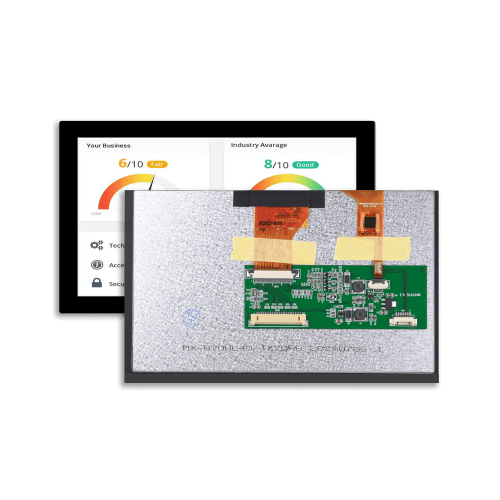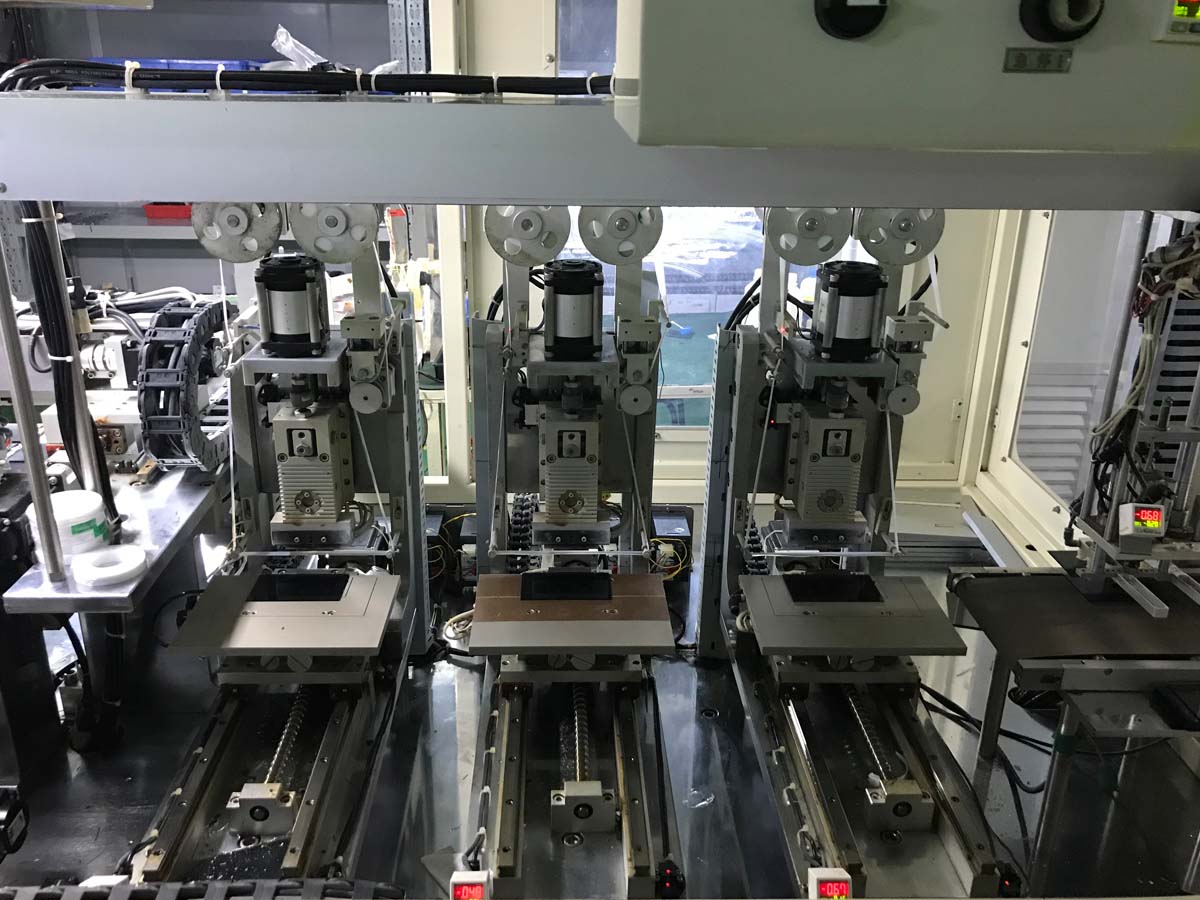
ACF lamination is a critical preparation process in TFT LCD manufacturing. Anisotropic Conductive Film (ACF) is precisely applied to the electrode area of the TFT glass before subsequent bonding processes, helping create stable electrical connections while maintaining insulation between adjacent conductive traces.
At MAXEN, controlled ACF film placement, alignment, temperature and pressure management help prepare the TFT glass for reliable FPC and driver-related bonding in later production stages.
Technology Basics
ACF, or Anisotropic Conductive Film, is a specialized adhesive film containing microscopic conductive particles dispersed within an insulating resin. During the bonding process, pressure and heat allow selected conductive particles to form electrical paths through the thickness of the film while helping prevent electrical connection between neighboring traces.
This anisotropic conductive behavior makes ACF suitable for fine-pitch interconnections used in TFT LCD modules, where many electrical contacts must be connected within a compact area.
Manufacturing Value
The quality of ACF lamination directly affects the stability of the subsequent LCD bonding process. Accurate positioning and consistent process control are especially important as TFT LCD modules move toward higher resolutions, narrower bezels and finer electrode pitches.
Supports dense electrical interconnections between TFT glass, flexible circuits and related components.
Consistent ACF bonding helps maintain reliable electrical contact across the display module connection area.
ACF technology supports thin and space-efficient interconnection structures for modern TFT LCD modules.
Controlled alignment, surface condition, temperature and pressure reduce the risk of bonding defects.
Process Control
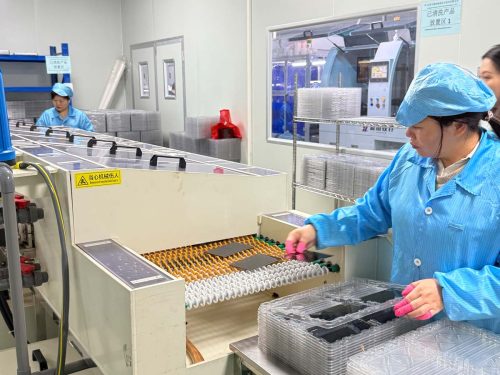
A reliable ACF bonding process depends on more than simply applying the film. Surface preparation, film positioning, pre-lamination and inspection must work together before the TFT glass enters the next bonding stage.
The TFT glass bonding area must be clean and free from particles, oil, moisture and other contaminants that could affect ACF adhesion or electrical contact.
The specified anisotropic conductive film is fed to the bonding area according to the electrode layout and module design requirements.
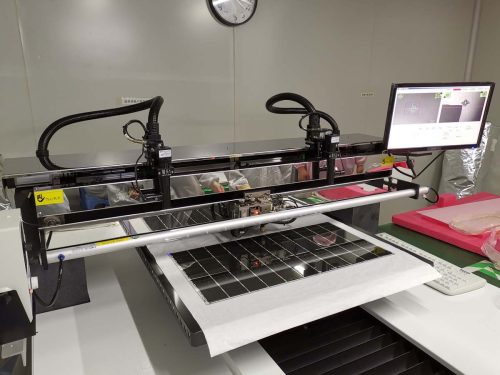
The ACF film is positioned accurately over the designated TFT glass electrode area to prepare a consistent bonding interface.
Controlled heat and pressure temporarily secure the ACF film onto the glass while maintaining the required position for the following assembly process.
Temperature, pressure and processing time are controlled according to the selected ACF material, electrode design and TFT LCD module requirements.
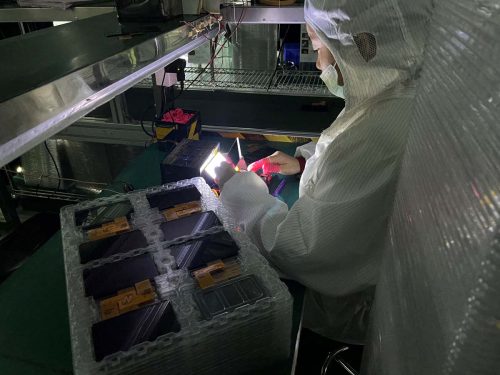
The bonding area is checked for film position, contamination, wrinkles, bubbles and other conditions that could influence subsequent bonding quality.
Process Relationship
ACF acts as an electrical and mechanical interface in several fine-pitch LCD assembly processes. Proper ACF lamination therefore provides an important foundation for the bonding stages that follow.
In COG assembly, ACF can provide the conductive interface used to connect a driver IC to electrodes on the TFT glass.
In FOG assembly, ACF can create electrical connections between the flexible printed circuit and corresponding electrodes on the TFT glass.
Learn more about TFT LCD technology and MAXEN display manufacturing capabilities.
Quality Assurance
Small variations during ACF film lamination can influence later electrical connection quality. For this reason, the bonding area and key process conditions should be monitored throughout production.
Confirm that the ACF is aligned with the specified electrode area.
Prevent particles and residues from entering the bonding interface.
Maintain suitable thermal conditions for the selected ACF material.
Apply controlled pressure consistently across the bonding area.
Inspect the laminated film for visible defects before subsequent bonding.
Maintain repeatable process conditions across production batches.
Production Flow
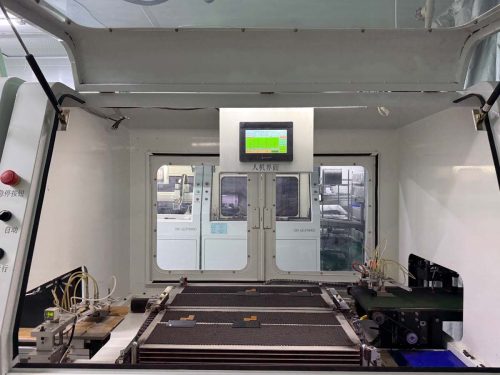
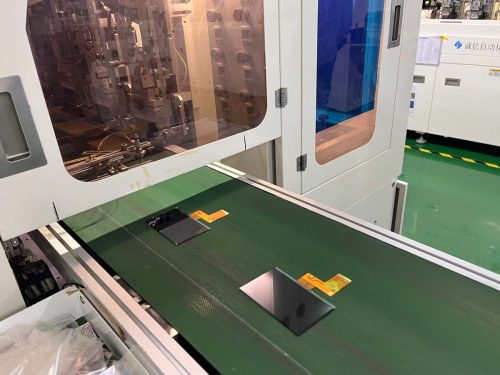
ACF lamination is not an isolated manufacturing step. It connects the TFT glass preparation stages with the precision bonding processes that follow.
Technical FAQ
ACF stands for Anisotropic Conductive Film. It is an adhesive film containing conductive particles and is used to create fine-pitch electrical connections between components such as TFT glass, driver ICs and flexible printed circuits.
When suitable heat and pressure are applied during bonding, conductive particles form electrical paths through the thickness of the film. At the same time, the insulating resin helps keep adjacent conductive traces electrically isolated from one another.
ACF lamination generally refers to applying and pre-attaching the ACF film to the designated bonding area. Final ACF bonding occurs when the mating component is aligned and bonded under the required heat and pressure to establish the electrical connection.
In COG bonding, ACF can connect a driver IC directly to TFT glass electrodes. In FOG bonding, it can connect a flexible printed circuit to the TFT glass. The specific structure depends on the LCD module design.
Temperature and pressure influence adhesive flow, conductive particle compression and final connection quality. Suitable parameters must therefore be matched to the ACF material and the specific TFT LCD module design.
MAXEN supports customized TFT LCD display and touch screen solutions, including display selection, interface customization, touch integration and bonding solutions for industrial applications.



+86-13923461826