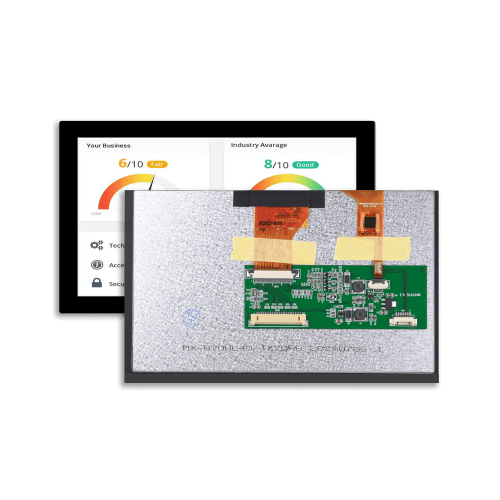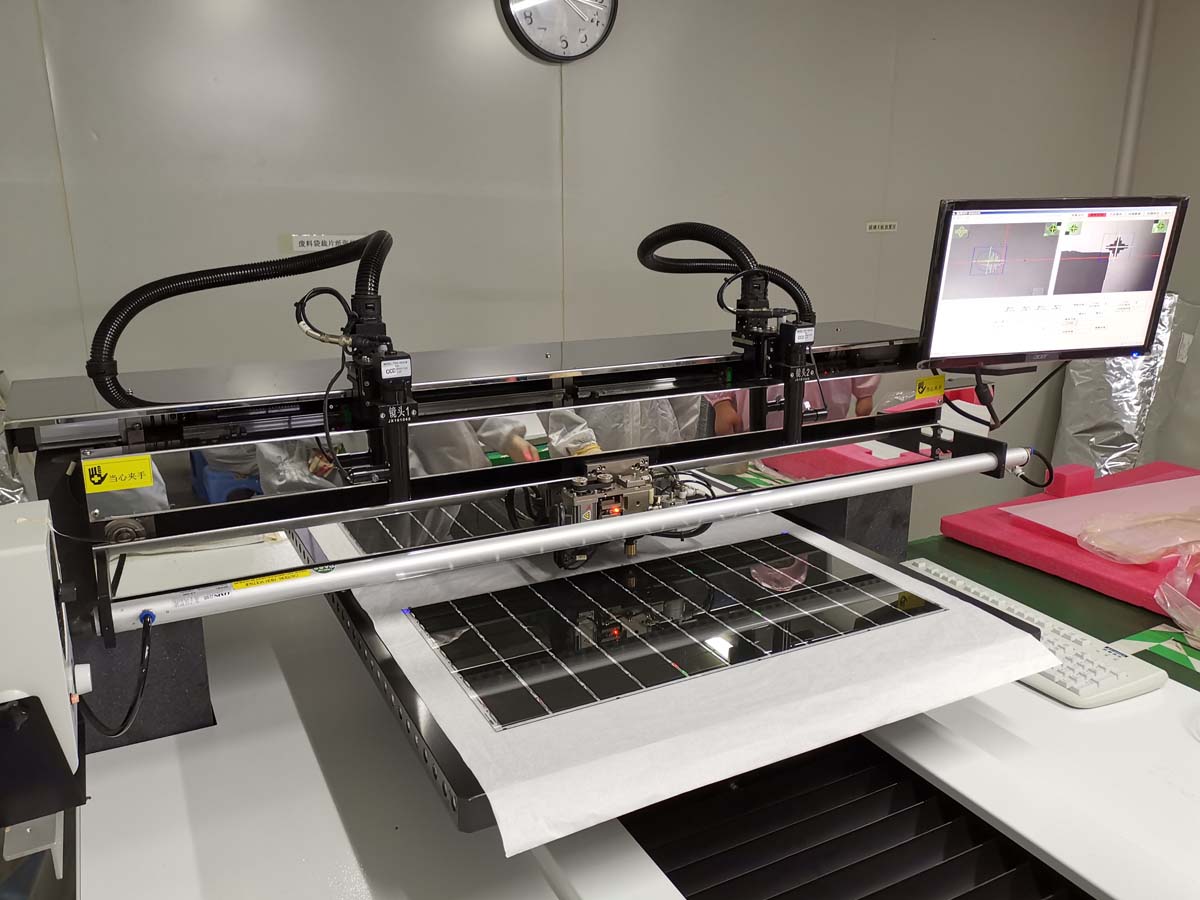
Glass cutting is the first physical processing stage in TFT LCD module manufacturing. Large TFT glass substrates are separated into the required panel dimensions before cleaning, bonding and module assembly.
Accurate cutting and careful handling help maintain panel geometry, protect the glass edges and create a stable foundation for the downstream TFT LCD manufacturing process.
Technology Basics
TFT LCD glass cutting is the process of separating larger display glass substrates into individual panel sizes according to the required module design. Precise dimensions, clean cutting paths and controlled glass separation are important because small edge defects can influence later handling and bonding operations.
The objective is not only to achieve the specified panel size, but also to maintain stable edges and consistent geometry for the following cleaning, ACF lamination and flexible-circuit bonding processes.
Manufacturing Value
The quality of the initial glass cutting stage influences how reliably the TFT panel can move through subsequent manufacturing operations. Stable dimensions and controlled edges are especially important for alignment, automated handling and fine-pitch bonding.
Consistent dimensions help ensure compatibility with the required LCD module mechanical design.
Careful cutting helps reduce edge damage that may develop into cracks during later handling.
Accurate panel geometry supports positioning in cleaning, lamination and bonding equipment.
Repeatable glass preparation provides a stable starting point for TFT LCD module production.
Process Control
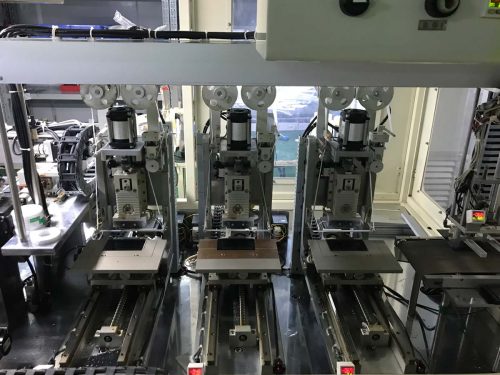
A controlled glass cutting process combines design verification, positioning, precision separation and inspection before the panel moves to the cleaning stage.
The required panel dimensions, orientation and cutting layout are checked against the TFT LCD module design.
The substrate is positioned and supported to maintain stability during the cutting operation.
The specified cutting path is created according to the panel geometry and substrate requirements.
The individual TFT glass panel is separated while minimizing unnecessary mechanical stress on the edges.
Panel dimensions and visible edge conditions are checked before the glass proceeds downstream.
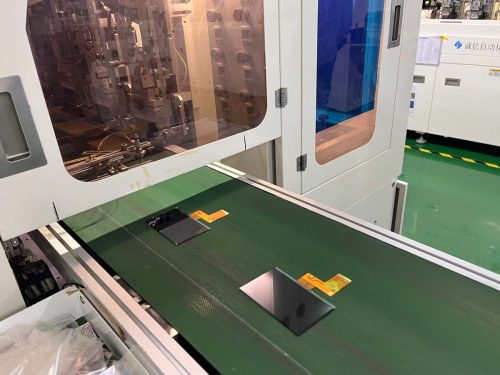
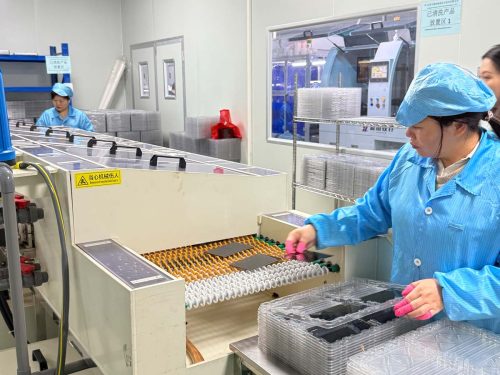
The cut TFT glass is handled carefully and transferred to the next manufacturing stage to reduce contamination and damage.
Process Relationship
Glass cutting establishes the physical foundation of the TFT panel. Stable dimensions and edges make subsequent cleaning, positioning and bonding easier to control.
Controlled dimensions and edge conditions prepare each TFT panel for reliable handling.
Consistent glass geometry supports cleaning, ACF lamination and later bonding alignment.
Learn more about TFT LCD technology and MAXEN display manufacturing capabilities.
Quality Assurance
Inspection after cutting helps prevent damaged or dimensionally inconsistent glass from entering later TFT LCD production stages.
Confirm that the cut glass matches the specified module dimensions.
Check for visible chips, cracks and irregularities along the panel edge.
Verify consistent shape and alignment characteristics.
Prevent scratches and handling damage during panel separation.
Reduce unnecessary particles and contamination before glass cleaning.
Maintain identification through the manufacturing flow where required.
Production Flow
Glass cutting begins the six-stage TFT LCD production sequence and prepares the substrate for controlled cleaning and precision bonding.
Technical FAQ
Glass cutting determines the physical dimensions and edge condition of the TFT panel. Accurate cutting helps support stable handling, alignment and bonding in later production stages.
Edge chips or cracks can weaken the substrate and may expand during handling, bonding or mechanical assembly.
No. The suitable method depends on substrate thickness, glass structure, panel geometry and production requirements.
Typical checks include panel dimensions, geometry, edge condition, scratches and other visible damage.
The cut TFT glass proceeds to the cleaning stage, where particles and surface contamination are removed before ACF lamination and bonding.
MAXEN supports customized TFT LCD display and touch screen solutions, including display selection, interface customization, touch integration and bonding solutions for industrial applications.



+86-13923461826